
Identify deviations before they result in scrap
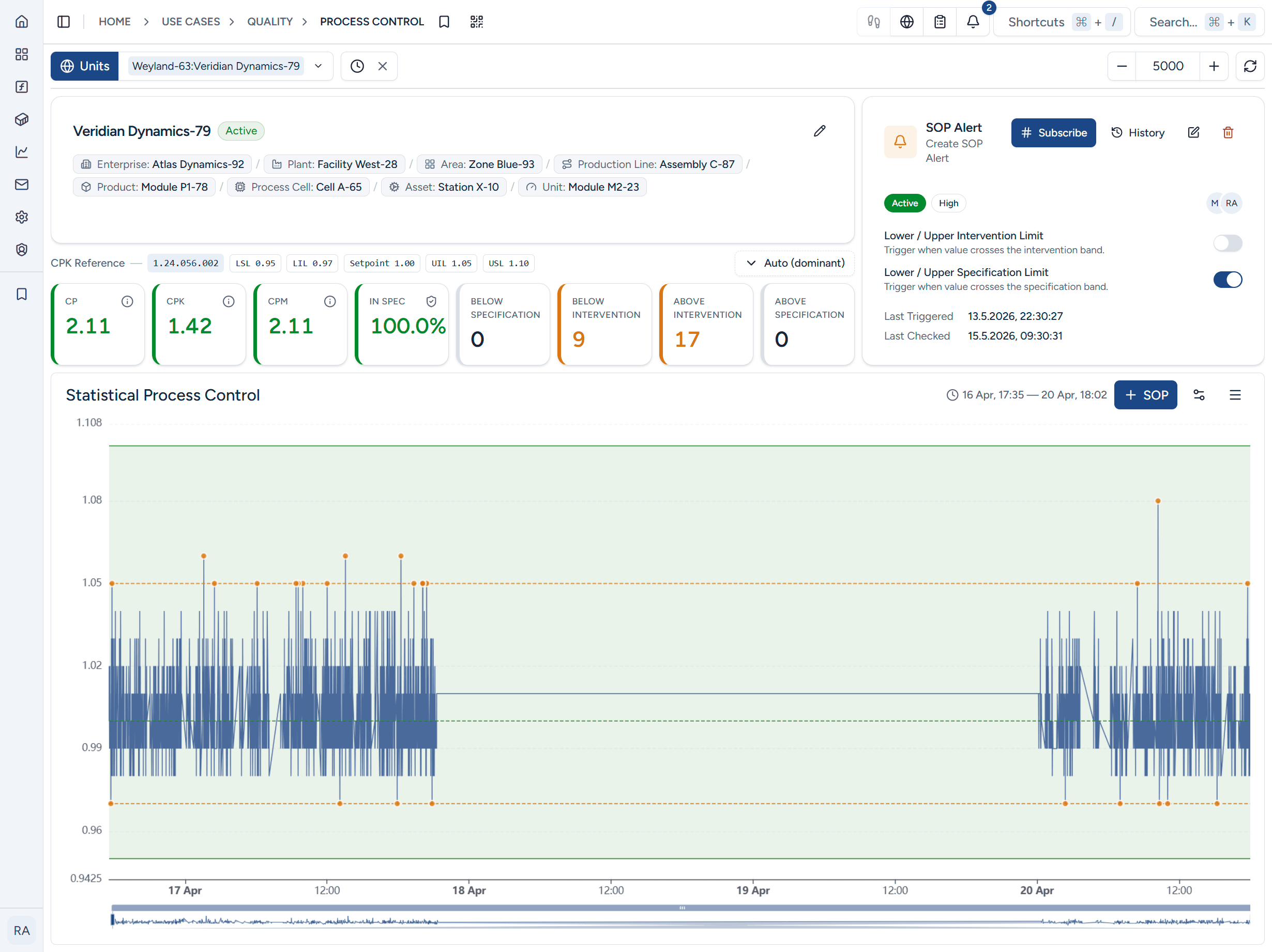
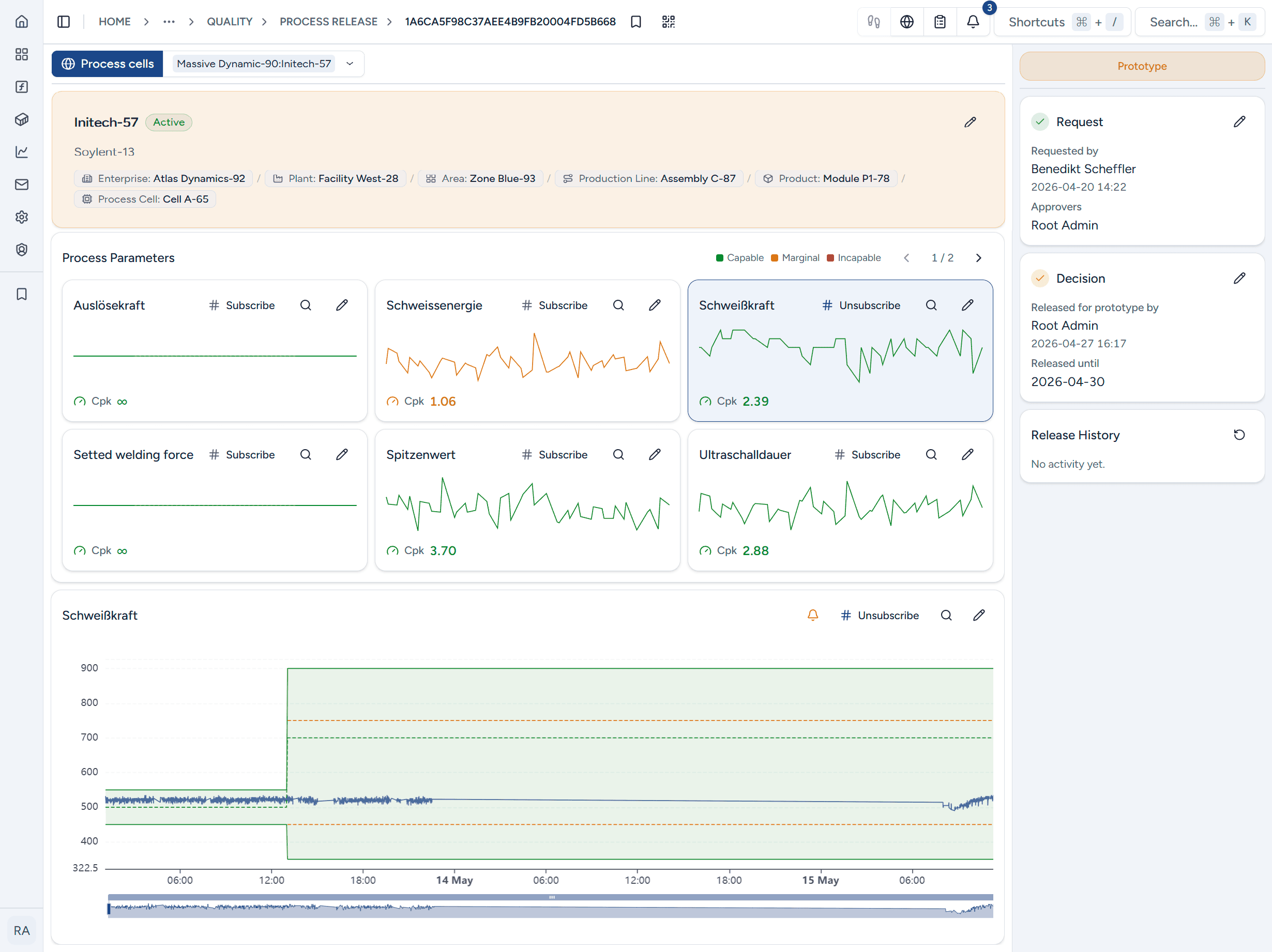
Rule-based monitoring of process parameters—thresholds, trends, patterns, and SPC control charts—with clearly defined escalation paths to the team. Operators, shift supervisors, and quality engineers can see when a line is veering off course long before it affects the final product. Configurations can be easily maintained and adjusted by your experts.
A scene
Three layers, one torque, one drift.
Over the course of three shifts, torque drifts upward within the tolerance range. The automatic SPC monitoring system detects the pattern—seven data points above the mean—and notifies the shift supervisor via Microsoft Teams. The supervisor adjusts the tool and documents the action in the shift log. No scrap, no issues reported by the customer.
Effect
When deviations become apparent early on.
Early Detection
Drifts, trends, and patterns are detected long before the final product falls outside the tolerance range—resulting in less scrap, less rework, and fewer downstream complaints.
A Clear Escalation
The right person receives the right information at the right time. Operators respond on the shop floor, shift supervisors make decisions, and quality engineers analyze—each role sees what it needs, without a chain of phone calls.
Documentation included
Every deviation, every escalation, and every response occurs within the context of the shift and is recorded in the audit trail. Compliance reports are generated automatically by the system, not based on memory.

How It Works
Rules that you maintain for each line, machine, and product variant.
Rules are defined in the UI without code. Threshold values, trend criteria, and SPC control charts can be combined for each line, machine, and product variant—with each variant having its own limits, patterns, and escalations. New monitoring rules can be imported into the platform as templates and maintained by your quality engineers themselves.
- Thresholds, Trends, and SPC Control Charts: Classic min/max limits, drift detection using trends, SPC rules, and pattern recognition in time series.
- Escalation based on roles, not individuals:The notification is sent to the role (shift supervisor, QA manager); the system identifies the person currently on duty based on the shift schedule.
- Integrated with the shift log and the quality dashboard:Every incident is automatically recorded in the shift log, and every response is logged in the quality dashboard—without the need for duplicate data entry.
Mobile
The deviation will be reported wherever you are.
Escalations are routed to the responsible person via phone—through push notifications and the existing messaging app. Shift supervisors can view the relevant control chart with its history, acknowledge the alarm, and document the action taken directly from the device without having to return to the terminal. The user interfaces are designed for the shop floor: large touch areas, clear contrasts, and short navigation paths.
- Push notification and messenger escalation to the currently assigned role
- View control charts and trend lines on your mobile device—even in noisy environments and while wearing gloves
- Acknowledge the alarm and document the action verbally, right at the machine


Solutions
More Solutions at a Glance
Your data. A common foundation.
Let's work together to determine how your machines, systems, and data sources can be integrated into a robust platform architecture.